Industry & Strategy
The global baby-food market runs into the tens of billions of dollars and is growing steadily, with India among the fastest-growing regions thanks to…
8 min read
Industry & Strategy
Blue Ocean Strategy means creating uncontested market space rather than fighting rivals in a crowded field. Makhanza applies it by fusing heritage makhana and…
8 min read
Baby & Kids
Plant-based DHA is an omega-3 fatty acid sourced from algae rather than fish. DHA is critical for infant brain and eye development, and algal…
8 min read
Baby & Kids
Research consistently links adequate DHA in infancy to healthy brain structure and visual development, because DHA is a primary building block of neural and…
7 min read
Value Addition
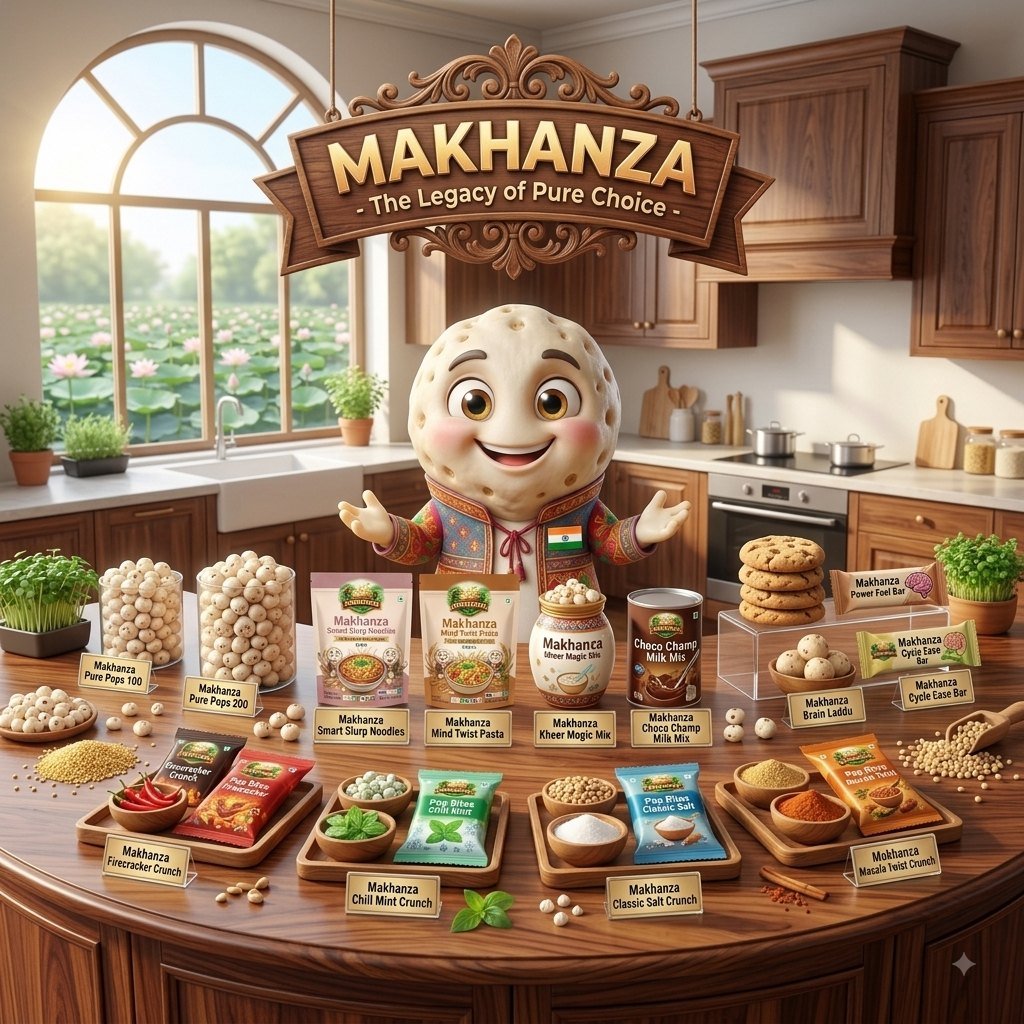
Value addition turns a raw commodity seed into branded, nutrition-forward products that earn more and reach more people. Makhanza mills roasted makhana with millets…
7 min read
Baby & Kids
Makhana can be introduced from around 8 months as a soft, well-cooked porridge or finely ground powder mixed into food. Start with small amounts,…
6 min read
Millets
Blending millets with makhana creates a more complete food: millets add complementary amino acids, minerals and slow carbohydrates, while makhana brings light protein and…
7 min read
Fitness
Makhana works well around training because it supplies slow-release carbohydrates for energy and plant protein for recovery, all with minimal fat. Eat a small…
6 min read
Health & Nutrition
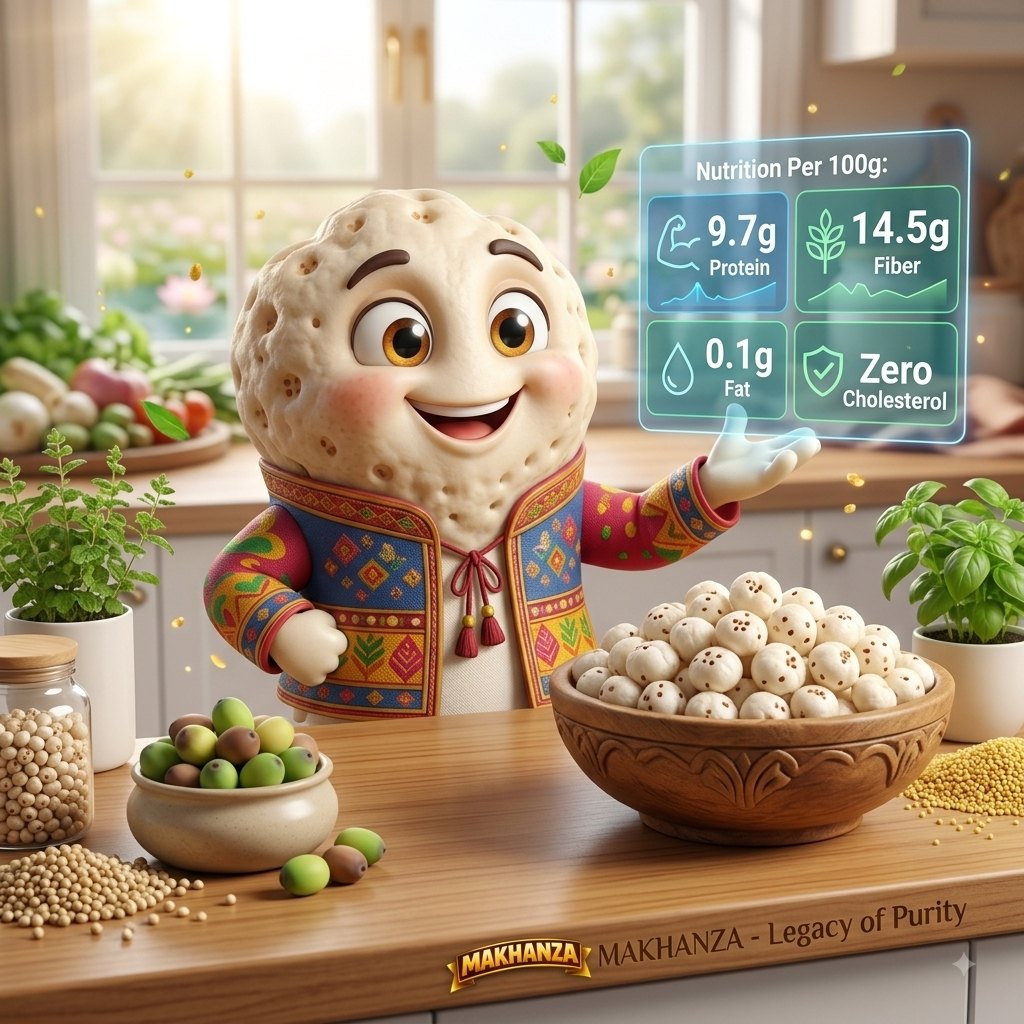
Yes. Per 100g, makhana delivers about 9.7g plant protein, 14.5g fibre and only 0.1g fat, with useful calcium and magnesium. It is naturally low…
7 min read
Blog
A 50g pack of plain roasted makhana is about 159 kcal — 318 kcal per 100g. Here is the full per-100g panel, the FSSAI…
Blog
Algae make DHA. Fish accumulate it by eating algae. Taking it from the source skips the fish entirely.
Blog
Makhana is low in fat and high in fibre, with a moderate glycemic index. Here are the figures, not a recommendation.



 Add to Cart